
Go Fry Asparagus!
Thoughts on a toothsome tongue
As a lifelong lover of language and a big-time fan of food, I’m right at home in Andalusia, where food so heartily informs the language. Around here, what comes out of a person’s mouth has a lot to do with what goes into it. If you’re spaced-out and listless, for example, you might be dubbed “eggy” (AHUEVADO), “breaded” (EMPANADO), “French-toasted” (ATORRIJADO), and/or “banana’ed” (APLATANADO). Should the condition turn chronic, you may come to be known as “a chubby egg” (UN HUEVÓN).
When you don’t give a damn in Andalusia, you might not give a cucumber (¡ME IMPORTA UN PEPINO!), a radish (¡ME IMPORTA UN RÁBANO!), a green pepper (¡ME IMPORTA UN PIMIENTO!), and/or a cumin seed (¡ME IMPORTA UN COMINO!). To threaten a person with a knuckle sandwich, you can threaten them with a “cookie” (UNA GALLETA), a “pineapple” (UNA PIÑA), a “cake” (UNA TORTA), or a “very big cake” (UN TORTAZO). If you’d rather just tell this person to get lost, you can tell them to “go fry asparagus” (¡VETE A FREÍR ESPÁRRAGOS!). If you want to say this person is lost, as in clueless, you can say they are “more lost than the rice boat” (MÁS PERDIDO QUE EL BARCO DEL ARROZ). That one evidently goes back to an incident where a freighter delivering rice ran aground off the coast of Cádiz.
In Andalusia, you can be skinny as a noodle, healthy as a pear, nervous as a flan. (FLACO COMO UN FIDEO, SANO COMO UNA PERA, NERVIOSO COMO UN FLAN.) You can be in the garlic (EN EL AJO), in the flour (EN LA HARINA), in your sauce (EN TU SALSA)--which is to say, in the know, in the zone, in your element. You can put all the meat on the spit (TODA LA CARNE EN EL ASADOR), get caught with your hands in the dough (CON LAS MANOS EN LA MASA), make a lot of noise without producing many walnuts (MUCHO RUIDO, POCAS NUECES).
Expressions with PAN, or “bread,” could fill their own dictionary1. If a task is a piece of cake, it is “eaten bread” (PAN COMIDO), and if it is routine, it’s “the daily bread” (EL PAN DE CADA DÍA). A good person is “a piece of bread” (UN CACHO DE PAN); a really good person is “a chunk of bread” (UN PEDAZO DE PAN); and a really, really good person is “better than bread” (MÁS BUENO QUE EL PAN). If this person is so incredibly good that you want to be with them always and forever, through thick and thin, you might say, “I’ll be with you, even in bread and onions” (CONTIGO, PAN Y CEBOLLA).
A word nerd can’t help but eat this stuff up, as it were. There’s a lot to chew on. The expression PELANDO LA PAVA (“plucking the turkey”), to mean “courting,” goes back to a time when a suitor might woo his love interest through the garden gate while she was at some domestic chore, e.g. plucking a turkey. Today the idiom is falling out of use, but it’s worth remembering, if only to remind us how dramatically the world can change. Not so long ago, having a turkey on the table would have implied a long list of time-consuming preparations. First you’d have had to spend a few months fattening the bird up, keeping it safe from predators and disease. When the big day finally arrived, you’d have had to dispatch the bird, pluck the bird, and dress the bird. You’d have had to build a fire in the oven to cook the bird. Today, of course, you might hop over to the supermarket and pick up a pre-plucked gobbler for the price of a mid-grade Rioja. On the way, if you fancy, you might chat up your sweetheart by Bluetooth—and call it plucking the turkey.
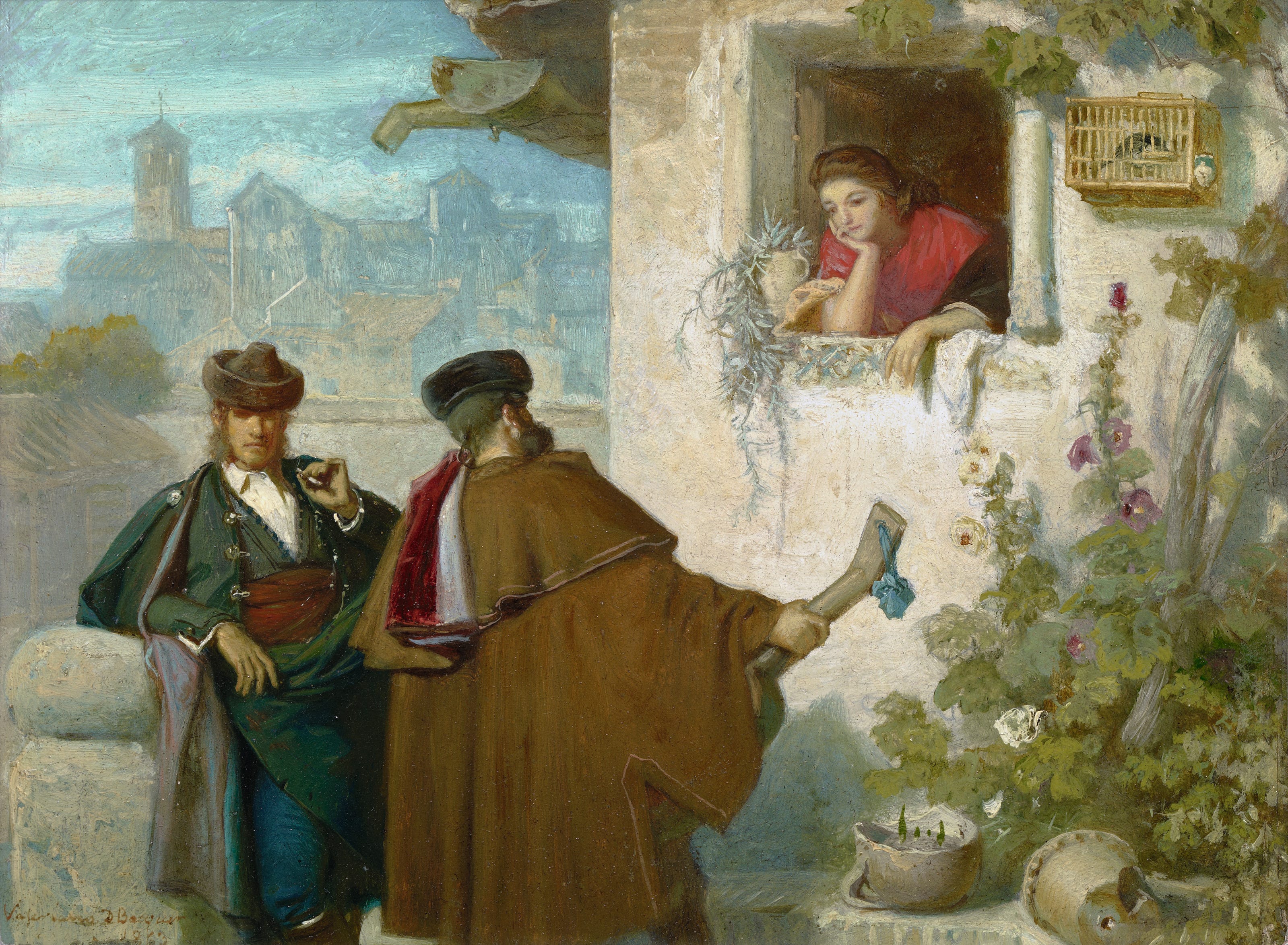
Pelando la pava lives on in the language, if not on the patio. Like so many other expressions that have outlasted the circumstances that first inspired them, it is a postcard from another time, a window into where the world has been on its way to now.
Y con eso y un bizcocho, hasta mañana a las ocho.
And with that and a sponge cake, until tomorrow at eight.
As could expressions with milk (leche). There’s enough milk in contemporary Spanish to merit a separate post at a later date.